Episode 26 | Echoes of History: 1932 Summer Olympics

Episode 26 | Echoes of History: 1932 Summer Olympics

Echoes of History

by Danielle Grandinetti | Sep 19, 2026

1932 Summer Olympics

Episode 26

Listen In

Below, you'll find the full transcript of today’s episode, in case you prefer to read or want to reference something we talked about.

About Sabotage Games

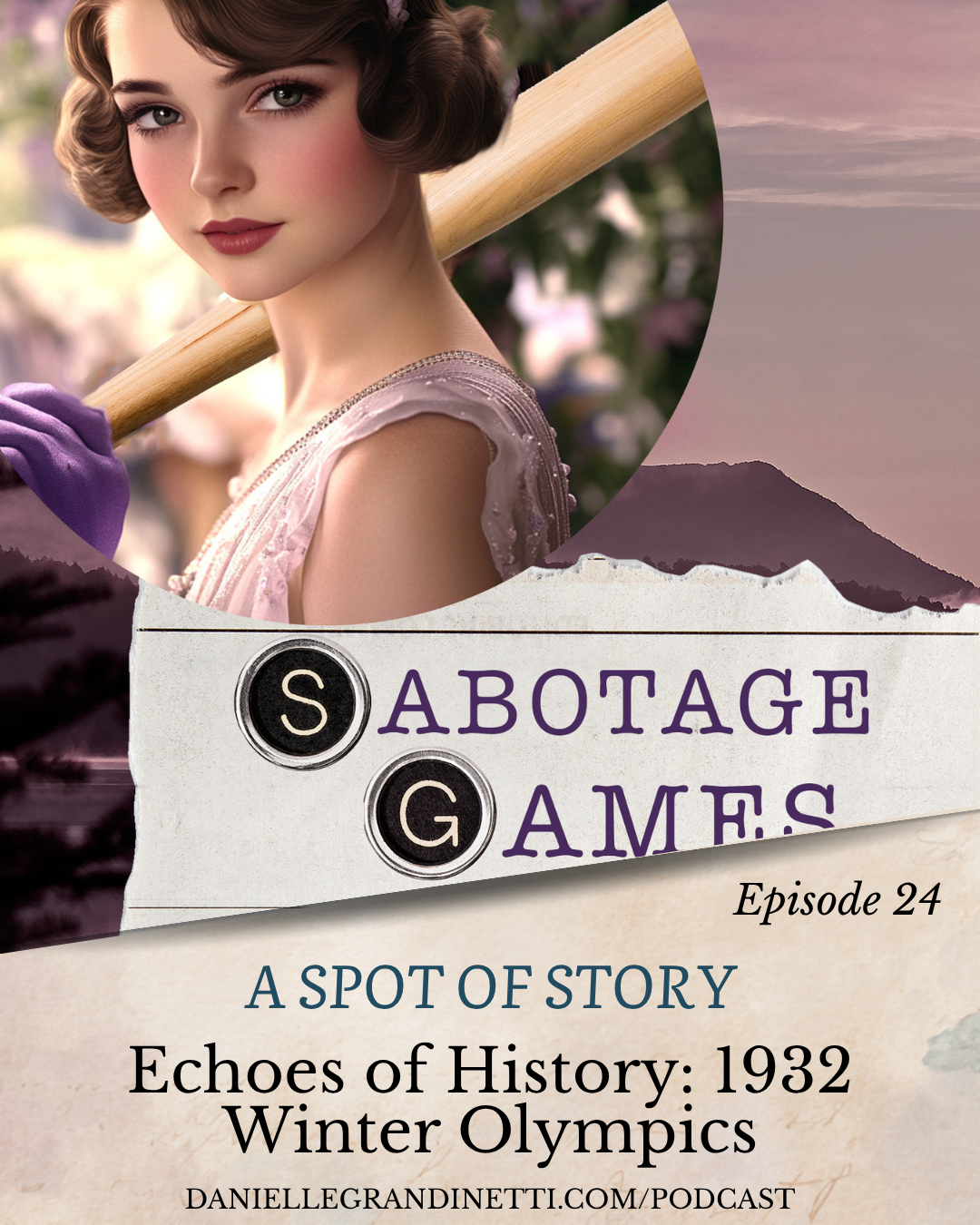
Book cover of Sabotage Games by Danielle Grandinetti, featuring a 1930s woman holding a baseball bat

Who will pay the ultimate price for Olympic Gold?

LAKE PLACID, N.Y., 1932—Sports journalist Emma Hancock is determined to claim her place in the press box, despite the male colleagues who slam the door in her face. But when a mysterious illness begins systematically sidelining athletes, Emma’s gift for spotting patterns reveals a plot far more sinister than mere competition.

With the Games in his own backyard, Olympic sprinter Ryan Callahan laces up his speed skates to compete in his first winter games. He has no time for distractions—especially not the inconvenience of the beautiful female journalist staying as a guest in his family’s crowded home.

But when the pattern of sabotage deepens, Emma and Ryan must work together to follow the threads before they become the next targets to fall.

La Verità con Integrità. Truth with Integrity. The Legacy of a (Girl) Stunt Reporter.

About Danielle Grandinetti

Danielle Grandinetti writes award-winning 1930s historical romantic mystery, earning the 2026 Holt Medallion. Fueled by tea, books, and nature, she crafts stories exploring immigrant heritage, found family, and cozy Midwest traditions. She lives along Wisconsin’s Lake Michigan shoreline with her husband and two boys. Find her at daniellegrandinetti.com.

Want to Read it Today?

*as an Amazon Affiliate, I earn from qualifying purchases.


Transcript

Welcome to A Spot of Story with Danielle Grandinetti. Cozy up with your favorite beverage as we chat about sweet romance, thrilling suspense, and fascinating history. Perhaps you'll find your next read in one of these stories.

On this episode of Echoes of History, we are diving back into the 1930s to talk about the Summer Olympics. Last month in my Echoes of History episode, I talked about the 1932 Winter Olympics in Lake Placid because they are the primary setting for my book Sabotage Games, a 1930s historical romantic mystery, part of the DiStasio Giornaliste Agency featuring an agency full of female reporters.

My sports reporter, Emma Hancock, traveled to the 1932 Winter Games and uncovered a fictional threat of sabotage. But the story doesn't end there—as the story progresses, she ends up at the Summer Olympics to cover the 1932 LA Games. And I thought this was such a fun little twist to include the LA games because the next Summer Olympics is going to take place in LA.

The 2028 games is the third time that Los Angeles has hosted the Summer Olympics. The first time was in 1932, and that's when the Coliseum that hosts all the things was built for those Summer Games. So it was so fun in the story to be able to include those types of details in the book.

The Winter Olympics was the first year that they used a medal podium, and it was kind of hodgepodge together for the Winter Games. But by the Summer Games, they'd fixed all the mistakes that they made the first time around, so it was numbered and it was more obvious which side was second, silver versus bronze. But track was competed at the Coliseum, and so it was just really fun to be able to include that in my story.

So today for Echoes of History, I want to talk more about the Summer Olympics since last month I talked about the Winter Games. And not just the Summer Olympics, but obviously since this is Echoes of History, more specifically the 1932 Olympics.

The 1932 Summer Games was the 10th Olympiad. The Winter Olympics was the third Winter Olympiad. The Summer Games of 1932 were the 10th Olympiad, so they were still working out what it looks like for the modern Olympic Games.

What made the 1932 games unique, however, was the fact that it happened at the heart of the Great Depression. And that's the thing about the Great Depression—it wasn't just in the US, it was a global depression. So the fact that other countries were in economic hardships meant that the first LA games were much smaller than perhaps the four years before. Four years later, they were in Berlin, so things were a little dicey in those couple of years, which brings me to another part of the Olympics that I found entirely fascinating.

During the 1932 Summer Games, the Germans didn't really want to participate. The speculation is that they didn't want to be shown up by those they considered a lesser race than the Aryan blood. So instead of putting themselves up against people to perhaps fail, they preferred not to enter the competition. That changed in four years, which is part of why Berlin hosted the games—now they were prepared to show that the Aryan bloodline was the superior bloodline athletically.

Gender was a huge aspect in the 1932 Summer Games as well. Female Olympians were not appreciated, we'll put it that way. They were appreciated in that they were considered beautiful and athletic, but there was a general consensus that women should not be athletic in the way that the men were athletic. But if competing in the Olympics made them prettier, better mothers and wives, then people in general were all for it.

So between the racial challenges and then the gender challenges happening in the 1932 Summer Games, it was kind of a fraught Olympiad that year. And then you add economic challenges, all generally speaking made for a very interesting setting.

I don't spend a lot of time in LA in my book because I focused on the Winter Games during the 1932 games. But if you do follow along with my DiStasio Giornaliste Agency series, the heroine of the last book in the series does travel to the Berlin Games. Since I covered the Winter Olympics more in Sabotage Games, when I get to book six, I will spend more time on the Summer Games because of such major events that happened during the Berlin Summer Games, which is a different episode altogether.

For now, just talking about the LA Games.

Another aspect of the 1932 Summer Games that was unique was twofold. First, they shortened the Summer Games so that it was a more focused time as opposed to stretched over weeks or maybe stretching months. Instead, it was just 16 days, and it's been between 15 and 18 days ever since according to the Olympic website.

It's really fascinating. I highly recommend browsing the Olympic website. It's got so much history and so many interesting historical tidbits that if you're a history buff, especially an Olympic history buff, definitely go explore that.

And the other aspect: because they had it shortened, they were able to create the very first Olympic Village. The male athletes were housed in this community they built, whereas in past Olympics, they stayed at hotels or wherever they found housing. But in this particular Olympic, it was the first time there was actually an official Olympic Village. But it was only for the men, and the women were housed in one of the local hotels.

There was one particular Olympic athlete that I found the most intriguing during my research for Sabotage Games, and that athlete was Mildred Ella "Babe" Didrikson. She was an American track and field athlete. But again, at the time, women were not allowed to compete very much, so she could only compete in the three sports allowed to her. In the three sports she participated in, she won gold, gold, and silver. The speculation is that had women actually been able to compete in, say, the pentathlon that is available to them today, she may have won that handily.

She was an all-around incredible athlete, and then she went on to become one of the best female golfers of her time. I love learning about these unique individuals that were ahead of their time. Because of that, we don't remember them as well because they were so innovative and so at the cutting edge of their sport. But they also are athletes that paved the way for the modern success of women today. With that in mind, I love being able to highlight some of these women like Babe Didrikson.

While this is primarily a history podcast, I am looking forward to the 2028 LA games, and I'm hopeful that because the 1932 games were set in LA, perhaps we'll get to see some of this history played out during the opening games in '28. I'm also looking forward to just seeing how the Olympics keep growing, changing, and adapting.

There are always sports, as I talked about last month, that need to have gender equality. There are always ways that we can improve and grow as we show the incredible athleticism that is part of humankind. I'm so glad I got a chance to explore the 1932 Olympics in Sabotage Games, and I hope if you are curious about the Winter Olympics, you'll check out last month's episode.

Otherwise, if you want to read a fictional telling of the 1932 Winter and Summer Games, I hope you'll grab yourself a copy of Sabotage Games, where some of this history that I talked about today will be woven into that story.

Thank you for listening to A Spot of Story with Danielle Grandinetti. We hope you enjoyed today's conversation. Let us know by leaving a comment below, and be sure to subscribe so you don't miss an episode. Discover more information about today's book by visiting A Spot of Story online at daniellegrandinetti.com/podcast.

Happy reading.

To make this story accessible to everyone, an AI-assisted transcript is provided above. It has been edited for clarity to ensure it captures the heart of our conversation.

Share the Tea

Enjoyed today’s post? You can share it with a friend, pin it to your reading list on Pinterest, or pass it along in your favorite book group. You’re welcome to use this graphic or one of the share buttons below.

I’d love to hear what resonated with you about this book — feel free to leave a comment. I always reply, though if it’s your first time posting I’ll need to approve it before it appears.

And if you’d like to support me and help keep it free, you can always buy me a tea.
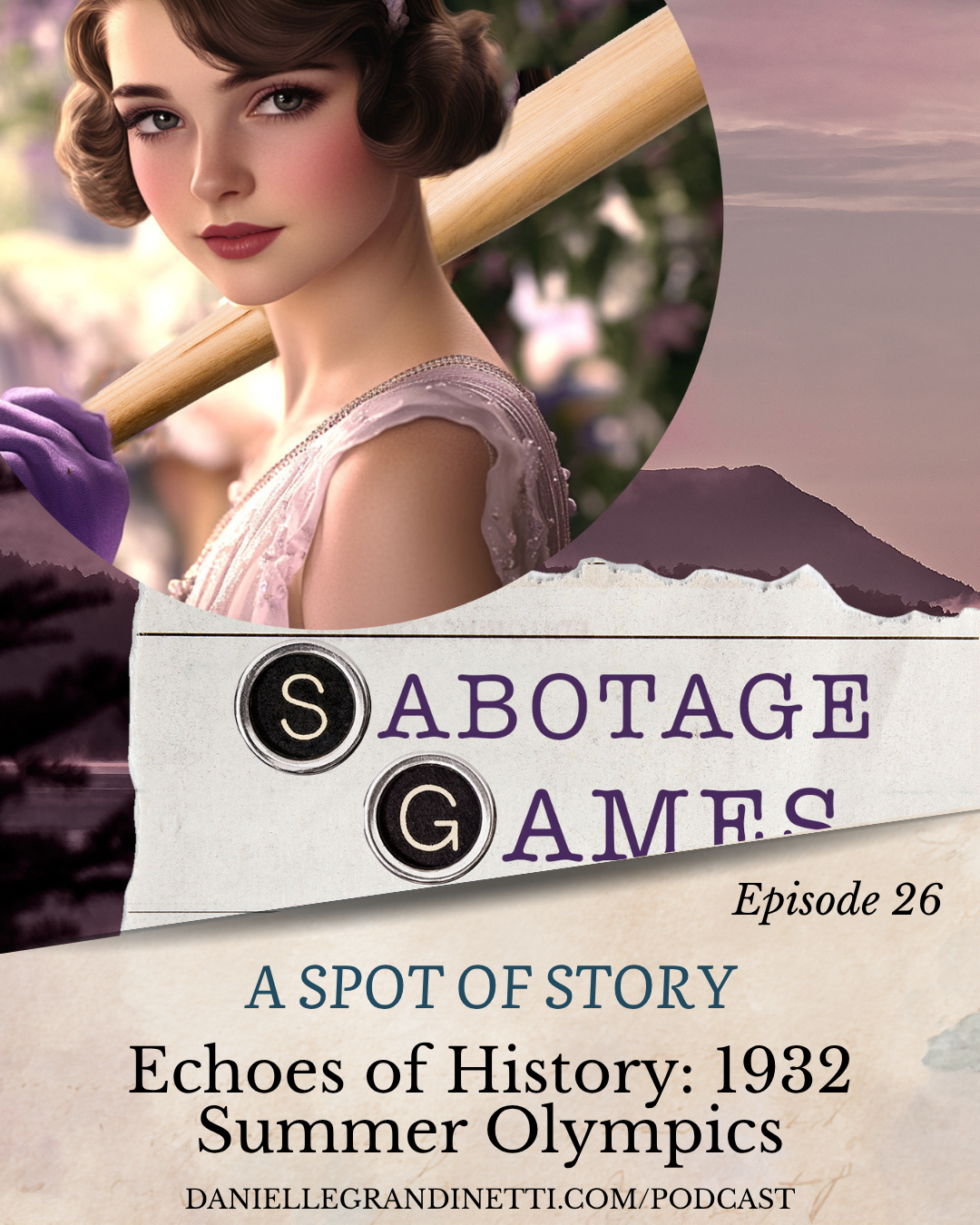
Retro poster collage: a woman with a wooden bat, torn label reading 'Sabotage Games,' and podcast title lines about the 1932 Summer Olympics.

Ciao, and thanks for visiting!

The best way to stay connected is through my weekly email, Fireside News. You’ll receive cozy updates, behind-the-scenes book notes, and a complimentary historical romance novelette when you subscribe.

Until next time, may your reading bring both light and encouragement.

Happy reading!
~ Danielle.
Episode 26 | Echoes of History: 1932 Summer Olympics

Episode 24 | Echoes of History: 1932 Winter Olympics

Echoes of History

by Danielle Grandinetti | Aug 15, 2026

1932 Winter Olympics

Episode 24

Listen In

Below, you'll find the full transcript of today’s episode, in case you prefer to read or want to reference something we talked about.

About Sabotage Games

Book cover of Sabotage Games by Danielle Grandinetti, featuring a 1930s woman holding a baseball bat

Who will pay the ultimate price for Olympic Gold?

LAKE PLACID, N.Y., 1932—Sports journalist Emma Hancock is determined to claim her place in the press box, despite the male colleagues who slam the door in her face. But when a mysterious illness begins systematically sidelining athletes, Emma’s gift for spotting patterns reveals a plot far more sinister than mere competition.

With the Games in his own backyard, Olympic sprinter Ryan Callahan laces up his speed skates to compete in his first winter games. He has no time for distractions—especially not the inconvenience of the beautiful female journalist staying as a guest in his family’s crowded home.

But when the pattern of sabotage deepens, Emma and Ryan must work together to follow the threads before they become the next targets to fall.

La Verità con Integrità. Truth with Integrity. The Legacy of a (Girl) Stunt Reporter.

About Danielle Grandinetti

Danielle Grandinetti writes award-winning 1930s historical romantic mystery, earning the 2026 Holt Medallion. Fueled by tea, books, and nature, she crafts stories exploring immigrant heritage, found family, and cozy Midwest traditions. She lives along Wisconsin’s Lake Michigan shoreline with her husband and two boys. Find her at daniellegrandinetti.com.

Want to Read it Today?

*as an Amazon Affiliate, I earn from qualifying purchases.


Transcript

Welcome to A Spot of Story with Danielle Grandinetti. Cozy up with your favorite beverage as we chat about sweet romance, thrilling suspense, and fascinating history. Perhaps you'll find your next read in one of these stories.

On this episode of A Spot of Story: Echoes of History, we are traveling back to the 1930s to talk about the Olympics.

In the 1930s, there were two sets of Olympics. There were the 1932 Olympics and the 1936 Olympics. In this episode, we're going to talk about the 1932 Olympics, and specifically the 1932 Winter Olympics. Next month, come back, and we'll talk about the 1932 Summer Olympic Games.

I am an Olympic Games history buff. I am fascinated by how the Olympics have grown and changed since the modern Olympic Games began a little over 100 years ago. It's entirely fascinating how they began with relatively simple sports, such as track (which was called "athletics" at the time), and gradually grew to include more and more sports.

You'll notice, however, that a lot of the sports as they began were all men's sports. Women's sports have struggled to catch up in a lot of areas, which is probably a whole other episode that I could get into, so I won't talk too much about that today. However, it does play into my Olympic Games historical romance.

Sabotage Games follows a female sports reporter who travels to both the Summer and Winter Games, and I do talk a little bit about one of the women's sports that was highlighted during the Winter Games. That particular sport was speed skating.

Speed skating in the 1932 Winter Games was a demonstration sport. It was not actually an official race until, I believe it was the 1950s. So like I said, I probably have to do another episode just on female sports in Olympic history. But for now, we'll just talk about the Winter Games in Lake Placid in 1932.

Diving into the history of Lake Placid and its first time hosting the Winter Games was entirely fascinating.

The hero in my story, I picked speed skating as his sport. Speed skating at the time had two different starting types. One is a mass start, and the other is a timed start. So if you look at our current versions of speed skating, you have short track, which has that mass start where everyone starts at once, and then you have the long track, where you have two racers and they race—a little bit more of a timed, little less chaotic start, shall we say.

Those two different starts represented international rules versus American rules. Because the games were in America, they decided to use the American rules. There were enough countries that did not like that that they boycotted the games. There were a few other reasons for that, but the mass start that they were using in the speed skating meant a lot of the international speed skaters boycotted.

Another aspect of the Winter Games was that it was the first time that a tiered medal stand was used. It was funny: what they did for the platform was basically use hay bales or boxes to set up the different levels. It was basically thrown together. And then the announcer who announced the very first medals of the games—which was one of the speed skating races—accidentally put second place on the third-place spot and got it all mixed up, which was hilarious because there were no numbers. And so even though the rules were laid out and the instructions were written, and he's the one who actually wrote the instructions, he got it mixed up!

So the other aspect of the Winter Games that is fascinating is that Franklin Delano Roosevelt had just tossed his hat in the ring for the presidential campaign. He was Governor of New York at the time, and he came to the opening ceremonies. The opening ceremonies lasted half an hour, and then immediately went into a speed skating race, then they played hockey on the same ice rink, and then they had another speed skating race. It was just this whole big afternoon event.

However, the Olympic Games almost didn't happen that year because of the snow—or should I say, the lack of snow. Being outside and being winter sports, they were entirely dependent on the weather, and that year the weather did not cooperate until the night before the opening games when there was a blizzard. I believe a person or two might have died during that blizzard. It's one of those where it's like, "No, we wanted snow to gradually form a nice, cold, hard ice base, not have it all dump all at once." That is not what happened, to the point where throughout the games the ice kept melting, so they had to move several of the events to the inside arena, which is where the figure skating happened.

The figure skating I didn't dive into in my book very much, but there is quite a bit of history with the female figure skaters at the time. I would highly recommend—and I'll see if I can find the video again on YouTube so I can link it in my show notes—an actual recording of some of the highlights of the Winter Games. I found the ice skating part on the "misogynistically fascinating" side, if I can say it that way. You had these men basically critiquing these women as they did single spins on the ice, and they were standing a little close. It was just kind of awkward and odd, and yet this was the beginning of ice skating as a sport.

There was quite a bit of misogyny and racism all wrapped up in the Olympics at the time. The bobsled run was placed on the Lake Placid Club land, but they almost lost the bid because the rules of the Lake Placid Club prohibited both Jewish members and Black members at the time. And so the racism and anti-Semitic laws almost denied Lake Placid the Olympic bid because of this.

The Lake Placid Club was owned by the Deweys. You might know Melvil Dewey as the founder of the Dewey Decimal System and former state librarian in New York, who was removed because of sexual harassment toward the female librarians around him. He was overall not a good man, and there is a lot of history to back up that particular claim—it's actually well-known within library science, and yet we use the Dewey Decimal System to this day.

He founded the Lake Placid Club, and his son, Godfrey Dewey, was actually the one operating it at the time. He was also highly involved in bringing the Winter Games to Lake Placid. And so they were able to work out a deal where the Lake Placid Club got no financial ramifications of having the bobsled run on their land in perpetuity—like if they ever sell the land, it's held in trust so that Lake Placid Club gets no benefit from the Olympic Committee using the land that they basically donated because of those bylaws in place at the time.

There's more to the anti-Semitic situation happening, but it tends to play a little bit more into the Summer Games, so we'll talk about that next time. But around all of this drama built around the 1932 Olympics, there were a couple of really key moments.

As I mentioned at the beginning, one of the biggest events over the course of the Olympics was the speed skating records. An American, Jack Shea, is the man who won as the fastest speed skater. On the women's side, the fastest female speed skater was Jean Wilson. She not only won the 500-meter speed skating final, but her record was actually faster than the world record held by an Australian. She actually broke that record, but it is not recorded because it was an exhibition game, so it wasn't an official race.

I'm so glad that I chose to have a female sports reporter, because the dark areas around the Olympic Games—there were quite a few, and I think making sure that we don't forget those things is really important. Especially because there are still women's sports within...

Okay, I'm obviously going there right now because I can't wait for another month to talk about women's sports! There are still women's sports in the Olympic Games that are still exhibitions, that are still not considered official Winter Games, even though they have a men's sport.

One of the prime examples is the Nordic combined. It is only for the men. That is a combination of ski jumping and cross-country skiing, and at the moment, they deny the women entry. There's no women's Nordic combined—it's only for the men. And it is the only Olympic sport that doesn't allow women to compete. Like speed skating was 100 years ago, where it was only for the men and took years for the women to get it officially approved, Nordic combined is up against the same regulations, and they're trying to change that. Again, here we are 100 years later.

So that's one of the things that I love about diving into Olympic history. We can see how far we've come, but we're still not there yet. There's still so much to go in the Winter Olympics and making sure that both men and women have a fair chance to compete.

At the time, the Winter Olympics and Summer Olympics were held in the same year and often in the same country. It was combined, and then after World War II is when they split to every other cycle. The 1932 Olympics is considered the third Winter Olympiad.

Most of my book, Sabotage Games, is set in Lake Placid. I do dive a little bit into the Summer Olympics in that book, and I'll talk more about the Summer Olympic Games next month.

Thank you again for joining me today on Echoes of History as we dive back into the 1932 Winter Olympic Games.

Thank you for listening to A Spot of Story with Danielle Grandinetti. We hope you enjoyed today's conversation. Let us know by leaving a comment below, and be sure to subscribe so you don't miss an episode. Discover more information about today's book by visiting A Spot of Story online at daniellegrandinetti.com/podcast.

Happy reading.

To make this story accessible to everyone, an AI-assisted transcript is provided above. It has been edited for clarity to ensure it captures the heart of our conversation.

Share the Tea

Enjoyed today’s post? You can share it with a friend, pin it to your reading list on Pinterest, or pass it along in your favorite book group. You’re welcome to use this graphic or one of the share buttons below.

I’d love to hear what resonated with you about this book — feel free to leave a comment. I always reply, though if it’s your first time posting I’ll need to approve it before it appears.

And if you’d like to support me and help keep it free, you can always buy me a tea.

Vintage-styled podcast cover: a woman in retro makeup holding a baseball bat over her shoulder, with torn-paper graphics and the text 'Sabotage Games' and episode title 'A Spot of Story' about the 1932 Winter Olympics.

Ciao, and thanks for visiting!

The best way to stay connected is through my weekly email, Fireside News. You’ll receive cozy updates, behind-the-scenes book notes, and a complimentary historical romance novelette when you subscribe.

Until next time, may your reading bring both light and encouragement.

Happy reading!
~ Danielle.
Episode 26 | Echoes of History: 1932 Summer Olympics

Episode 22 | Echoes of History: Beach Reads vs. Cozy Cabin Reads

Echoes of History

by Danielle Grandinetti | Jul 18, 2026

Beach Reads vs. Cozy Cabin Reads

Episode 22

Listen In

Below, you'll find the full transcript of today’s episode, in case you prefer to read or want to reference something we talked about.

About The Robber and the Witness

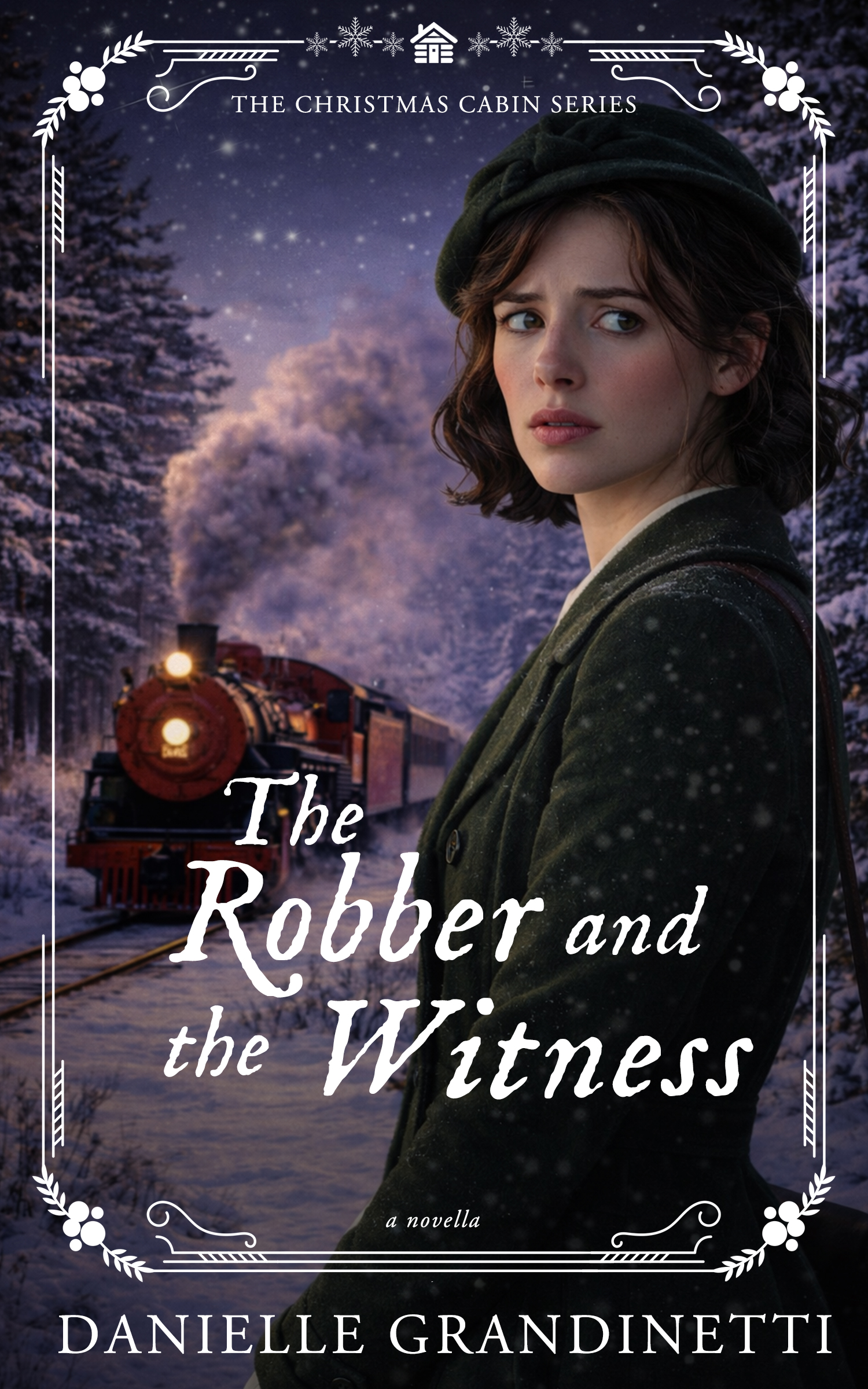
Book cover: The Robber and the Witness by Danielle Grandinetti. A woman in a green coat stands near a steam train in winter

A simple favor, a best friend's promise, and the end of the line.

Wisconsin, 1931—When Gideon Lundgren agrees to escort his best friend's sister to Manitowish Waters, plans go awry when she witnesses a robbery. He thinks he's merely escorting the girl he once knew, but she's grown into a charming beauty.

Evangeline Whitaker's older brother always warned that her kind heart would be the death of her. It might at that. First, when she's an unwitting accomplice to a robber. Second, when her childhood crush becomes her bodyguard.

With a robber on their trail and a tangle of emotions between them, Evangeline and Gideon detour to his boss's cabin to wait out the ensuing manhunt. However, Evangeline's Christmas spirit might be the death of them both.

One cabin in the Northwoods … a decade of Christmas miracles.

About Danielle Grandinetti

Danielle Grandinetti writes award-winning 1930s historical romantic mystery, earning the 2026 Holt Medallion. Fueled by tea, books, and nature, she crafts stories exploring immigrant heritage, found family, and cozy Midwest traditions. She lives along Wisconsin’s Lake Michigan shoreline with her husband and two boys. Find her at daniellegrandinetti.com.

Want to Read it Today?

*as an Amazon Affiliate, I earn from qualifying purchases.


Transcript

Danielle Grandinetti: Welcome to A Spot of Story with Danielle Grandinetti. Cozy up with your favorite beverage as we chat about sweet romance, thrilling suspense, and fascinating history. Perhaps you'll find your next read in one of these stories.

On this episode of A Spot of Story: Echoes of History, we are diving back into the 1930s to talk about the difference between a beach read and a cabin read.

Actually, we're not going too far back into the historical archives today, because a beach read versus a cabin read doesn't necessarily have to do with a specific time period in history. But since I write 1930s historical romantic mysteries and classify them as cabin reads, it really does feel like diving back into that era.

It is summer right now, which is traditionally the season for beach reads. We usually think of beach reads as lighter, entertaining, and generally happier books. They can absolutely still have emotional depth, humor, and touch on deep topics, but their main goal is to pull you effortlessly into the story world. The defining thing about a beach read is that it's the type of book you take on vacation. It recreates that exact feeling you look for when sitting on the shore with your toes in the sand, the waves lapping at the water's edge, a cool wind on your skin, and the bright sun overhead. Certain books can evoke that mood even if you're actually sitting inside your lovely, air-conditioned home rather than baking in 100-degree heat. (Though if you are reading on a real beach, that's like a double-dipped ice cream cone!)

However, not all books create that specific feeling, nor do we always want it. Vacation is wonderful, but if you stay on vacation for too long, it stops feeling like a breakaway and you find yourself ready for a different emotional experience.

This is where "cabin reads," as I like to call them, come in. I'm certainly not the only author who writes them, but as I was attempting to explain the exact experience I want readers to have when they pick up my novels, I realized it shares the same immersive escape of a beach read, just with a completely different emotional frequency.

Where a beach read transports you to a sunny coastline, a cozy cabin read invites you to hunker down on a snowy, chilly afternoon. It makes you want to curl up with a big blanket and a warm cup of tea by a roaring fire while the snow falls outside, leaving you feeling entirely cozy and content. In a way, it’s a vacation spot of its own. I think a lot of us would love to live in that atmosphere permanently, but reality eventually presses in.

Ultimately, a book is meant to be an escape. The question is: what kind of escape do you want? Do you want an escape to the beach, or do you want an escape to a cozy cabin? At different points in the year, and during different seasons of our lives, we find ourselves craving those different experiences.

If you are looking for that cozy cabin experience, that is exactly where my books fit in. That feeling relies heavily on a sense of nostalgia because the pace is naturally slower. It leans into that Danish hygge mentality of a cozy, slow-living community and evokes that comforting emotional response of curling up for a long winter's nap. We crave that comfort at various times, but the holidays are the true pinnacle of a cozy cabin read—just as summer or spring break serves as the pinnacle for the beach read.

Sometimes, you want that crisp, wintry feeling at the opposite time of the year. A cozy cabin read can actually be the perfect escape when it's blistering hot outside because it lets you dream of colder weather. That is exactly why I love Christmas in July! I am a winter person through and through, I love the entire aesthetic, and my stories naturally reflect that specific vibe.

Can cozy cabin reads have humor? Absolutely. Who doesn't love a funny meet-cute in the snow? That is exactly what the best holiday movies are made of—those funny, tender little moments. Cabin reads can hold deep emotional connections just like beach reads do, but the final feeling they leave you with is what sets them apart. One wants to carry you to an evergreen forest where the snow is softly falling; the other carries you to white sandy beaches under a bright sun.

So, how do my books classify as a cozy cabin read? Personally, I am an immersive writer. I love giving my characters as many rich sensory details as I can to drop readers fully into the story world. While that is a common trait for fantasy world-building, I approach it from a historical perspective, building an immersive world set in the 1930s.

The only way I know I've succeeded in building that sanctuary is when I hear directly from readers. I am always so grateful when a review says something like, "I can't wait to go back to Crow's Nest," or "Grab your cozy blanket, this is the perfect read for snuggling up in the evening," or praising the way the stories bring history to life. Those are the exact phrases that equate to a true cozy cabin read experience.

The 1930s naturally evoke a unique sense of nostalgia; there is something about that particular era that carries a cozy, vintage quality. I also love weaving mystery into my stories, which coordinates beautifully with a cabin setting. When you think about Agatha Christie and traditional cozy mysteries, that puzzle-solving element lends itself perfectly to a snowed-in cabin mentality, even if it's not a strict rule across the board.

The key takeaway is that we choose a book because we are looking for a specific type of escape. When a story delivers on that promise and gives you the exact feeling you were searching for, it resonates on a much deeper level. That is why we continually return to these tropes. We carry fond memories of times spent in those settings, and books have the beautiful ability to transport us to those emotional experiences—whether they are based on our own lived memories or simply the ones we dream about.

Whether you are looking for a beach read or a cozy cabin read this week, I hope you find exactly the type of book your nervous system is looking for. And remember, if it's currently too warm for a cozy cabin read, my books will be waiting for you in the autumn. That fall and winter season is when this style of story really gets to shine.

Right now, unless you are looking for a Christmas in July escape, I have a Christmas Cabin series that can help get you through these hot summer months. Otherwise, enjoy your summer beach reads, and I will be right here in the fall with more cozy suspense, closed-door romance, and plenty of page-turning mystery.

Thank you for joining me today for this moment of Echoes of History. Perhaps it was less an echo of historical data today, and more about bringing the nostalgia of happy memories alive within the pages of our stories.

Thank you for listening to A Spot of Story with Danielle Grandinetti. We hope you enjoyed today's conversation. Let us know by leaving a comment below, and be sure to subscribe so you never miss an episode. You can find more information about today's featured books by visiting A Spot of Story online at daniellegrandinetti.com/podcast.

Happy reading.

To make this story accessible to everyone, an AI-assisted transcript is provided above. It has been edited for clarity to ensure it captures the heart of our conversation.

Share the Tea

Enjoyed today’s post? You can share it with a friend, pin it to your reading list on Pinterest, or pass it along in your favorite book group. You’re welcome to use this graphic or one of the share buttons below.

I’d love to hear what resonated with you about this book — feel free to leave a comment. I always reply, though if it’s your first time posting I’ll need to approve it before it appears.

And if you’d like to support me and help keep it free, you can always buy me a tea.

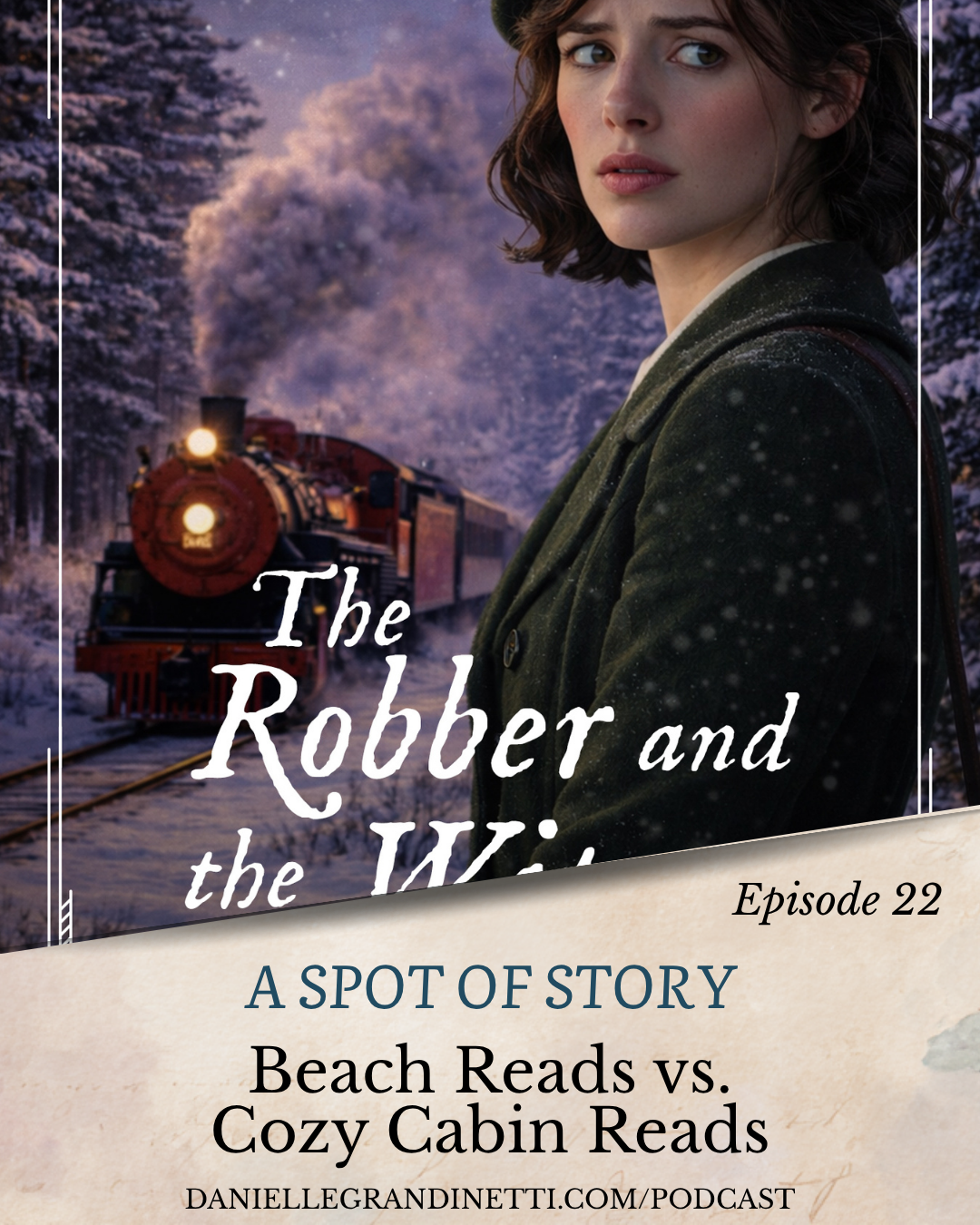
A podcast promotional graphic features a 1930s vintage book cover style image showing a young woman with a dark green coat and matching hat looking anxiously over her shoulder on a snowy train platform. A steam train with bright headlights approaches through a winter forest landscape behind her. Text overlay reads 'The Robber and the Witness,' 'Episode 22,' and 'A Spot of Story: Beach Reads vs. Cozy Cabin Reads.'

Ciao, and thanks for visiting!

The best way to stay connected is through my weekly email, Fireside News. You’ll receive cozy updates, behind-the-scenes book notes, and a complimentary historical romance novelette when you subscribe.

Until next time, may your reading bring both light and encouragement.

Happy reading!
~ Danielle.
Episode 26 | Echoes of History: 1932 Summer Olympics

Episode 20 | Echoes of History: Crow’s Nest Real-World Inspirations

Echoes of History

by Danielle Grandinetti | Jun 20, 2026

Crow's Nest Real-World Inspirations

Episode 20

Listen In

Below, you'll find the full transcript of today’s episode, in case you prefer to read or want to reference something we talked about.

About Confessions to a Stranger

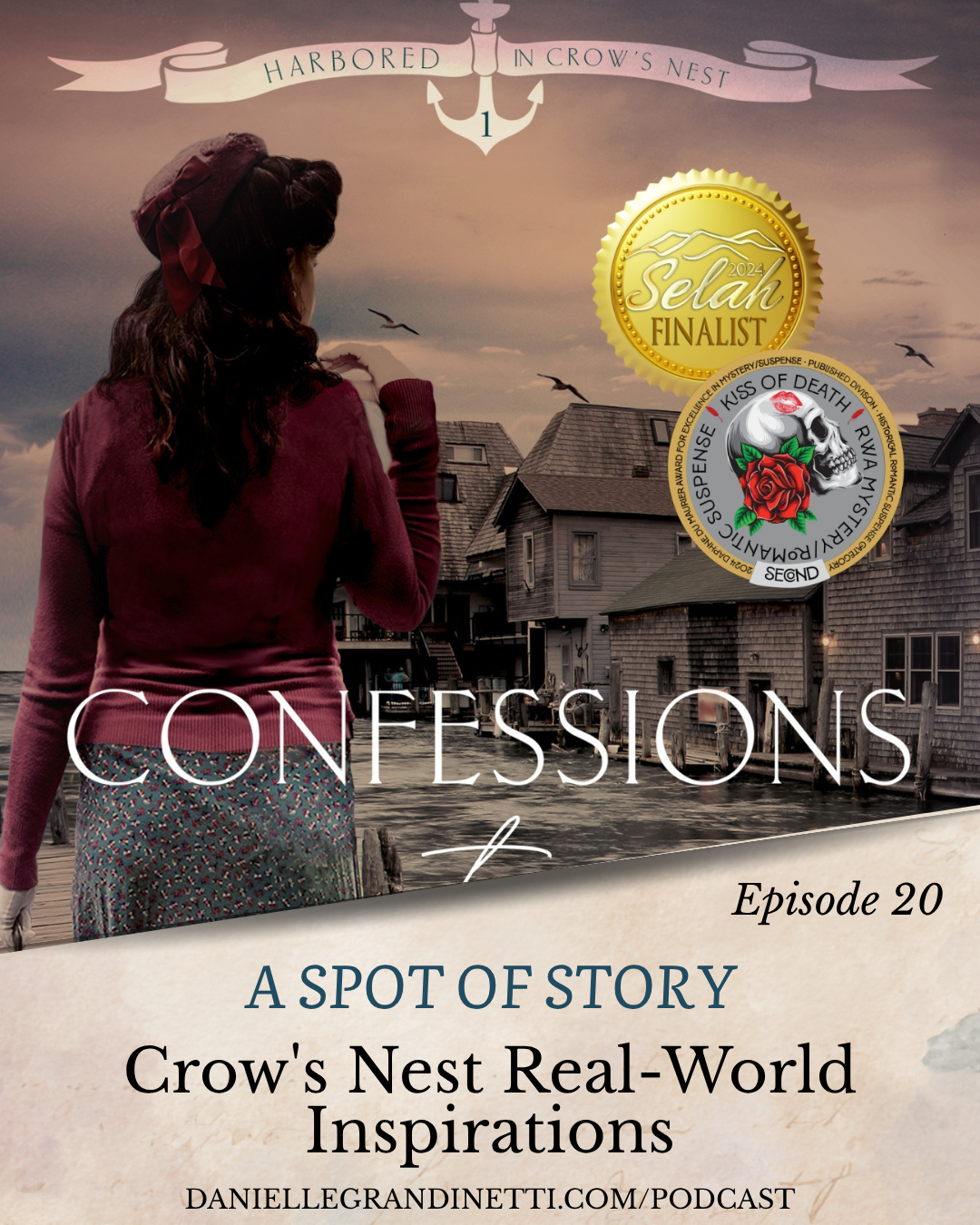
Harbored in Crows Nest 1 Confessions to a Stranger Cover

She’s lost her future. He’s sacrificed his. Now they have a chance to reclaim it—together.

Wisconsin, 1930—While fleeing for her life, Adaleigh Sirland’s rescue of a child introduces her to a family who provides her safe harbor. But all is not what it seems in the little fishing town. Danger lurks. And, though hiding under an assumed name, Adaleigh offers her ability to draw out confessions, making her a valuable asset to the police.

First mate David Martins is intrigued by the mysterious woman taken in by his grandmother, but knows she wrestles with a troubled past. When his estranged father is arrested for murder, David enlists Adaleigh’s help in proving his innocence. In return, he’s determined to help her find hope once again.

As the truth becomes more knotted, and Adaleigh’s real identity risks revelation, David must put aside his own struggles to discern which secret threatens Adaleigh before it kills them both.

Welcome to Crow’s Nest, where danger and romance meet at the water’s edge.

About Danielle Grandinetti

Danielle Grandinetti writes award-winning 1930s historical romantic mystery and suspense. She is the 2026 Holt Medallion winner and a second-generation Italian-American. Fueled by tea and nature, she crafts hope-filled historical romance novels exploring immigrant heritage, found family, and cozy Midwest traditions. Find her at daniellegrandinetti.com.

Want to Read it Today?

*as an Amazon Affiliate, I earn from qualifying purchases.


Transcript

Welcome to A Spot of Story. Cozy up with your favorite beverage as we chat about sweet romance, thrilling suspense, and fascinating history. Perhaps you'll find your next read in one of these stories.

On this episode of Echoes of History, we're stepping back into the 1930s to explore the creation of a fictional town. When I first sat down to write Confessions to a Stranger, I originally had the idea of writing a contemporary cozy mystery. It is not the story it turned out to be whatsoever, but the small-town aspect definitely stuck.

When I realized I needed to reset it in the 1930s, I considered where to set it. The hero's job is what prompted me to choose Lake Michigan. In the contemporary draft, the hero, David, was a charter fisherman. I chose charter fishing because I live on Lake Michigan and there is a vibrant charter fishing operation all up and down this section of the coast. I thought it would be really cool to highlight that.

However, I ended up setting the story aside for a while to work on another series that turned into a trilogy: Unexpected Protectors. That series is what prompted me to begin writing in the 1930s. When I came back to the book that is now Confessions to a Stranger, I realized I wanted to set it in the 1930s too, so I started a whole new set of research. What was it like being a fisherman in the 1930s? How could I use my communication background? How would that look? Perhaps another day I will go into that aspect, but a shout-out to the University of Illinois for its pioneering ways in helping women achieve a higher education.

For my hero's background as a fisherman, I learned so much about the history of fishing on Lake Michigan, especially from the Green Bay and Door County area down to Port Washington, just north of Milwaukee. This section of the state has a deep history of fishing. From the Native Americans who lived here to the immigrants who arrived, it very much has a culture of fishing.

By the time the 1930s rolled around, decades of intensive fishing meant the lake was overfished. That was right around the time the Wisconsin Department of Natural Resources (the Wisconsin DNR) started putting in fishing regulations. Somewhere in the middle of all of that, an invasive species entered Lake Michigan: the sea lamprey. It devastated the fish population and severely hampered the entire ecological system as well as the fishing economy.

All of this was playing out while a drought was happening throughout the state and crop rotation was beginning to take place. Farming was moving wheat out to the Great Plains and replacing it with potatoes. Meanwhile, the immigrant community, specifically German immigrants, had brought dairy farming into being as an actual industry, which peaked in the early 1900s.

By the time my hero is working as a fisherman, they have motors. I did some research on the types of motors they would have had at the time, which was really fun. That is what I find most fascinating about the 1930s—how on one hand, things were very much still rooted in the late 1800s with no electricity or telephones in rural spaces, and yet it was a time of rapid technological change. Engines were being created, electricity was finally reaching out of the cities, and dairy farming was mechanizing. It built up an industry that was much needed during a time of great economic depression.

So, back to my little town. I knew I wanted to set my fictional town on Lake Michigan within a heavily fishing-centric community. I crafted Crow's Nest after certain features within this specific section of coastal Wisconsin. For example, the boardwalk—or the wharf, as it's called depending on whether you're a local or a visitor—is inspired by the boardwalk along the Sheboygan River in Sheboygan.

The quaintness of the town is inspired more by Two Rivers, especially with the ice cream parlor. It is debated, but Two Rivers claims to be the original birthplace of the ice cream sundae. Having an ice cream parlor on the wharf is a bit of a nod to Two Rivers in that way.

I combined these different regional details within Crow's Nest, but I also wanted to create an element of isolation. To do that, I put a river that cuts off the town, creating a community with essentially one way in and one way out. It was incredibly fun to pull from the region while making it its own special place with unique people, bringing Crow's Nest to life almost as if it is its own character. I hope my readers feel that in the story.

The Harbored in Crow's Nest series is now complete at six books, plus some fun spin-off stories. It has definitely become the starting place and the foundation of my story world. Even though this series came after the Unexpected Protectors series, the way it was created felt so alive that it is the place where I recommend all my readers start.

When I wrote His Boss's Little Sister, it allowed me to create a bridge between the Harbored in Crow's Nest series and the Unexpected Protectors series, creating a 10-book epic foundation in my story world. From there, I keep building out. But Crow's Nest really is the heart. I find myself continually referring back to it, having characters drop by, or referencing people from there in other books because of how real the town became to me. I hope it feels that way for my readers as well.

Thank you for tuning in to this journey into the past and how I created the fictional town of Crow's Nest. You can find additional resources and show notes, including where to find the series, on the episode page.

Thank you for listening to A Spot of Story with Danielle Grandinetti. We hope you enjoyed today's conversation. Let us know by leaving a comment below, and be sure to subscribe so you don't miss an episode. Discover more information about today's book by visiting A Spot of Story online at daniellegrandinetti.com/podcast.

Happy reading.

To make this story accessible to everyone, an AI-assisted transcript is provided above. It has been edited for clarity to ensure it captures the heart of our conversation.

Share the Tea

Enjoyed today’s post? You can share it with a friend, pin it to your reading list on Pinterest, or pass it along in your favorite book group. You’re welcome to use this graphic or one of the share buttons below.

I’d love to hear what resonated with you about this book — feel free to leave a comment. I always reply, though if it’s your first time posting I’ll need to approve it before it appears.

And if you’d like to support me and help keep it free, you can always buy me a tea.

Ciao, and thanks for visiting!

The best way to stay connected is through my weekly email, Fireside News. You’ll receive cozy updates, behind-the-scenes book notes, and a complimentary historical romance novelette when you subscribe.

Until next time, may your reading bring both light and encouragement.

Happy reading!
~ Danielle.

Episode 26 | Echoes of History: 1932 Summer Olympics

Episode 18 | Echoes of History: Origins of the Great Depression

Echoes of History

by Danielle Grandinetti | May 16, 2026

Origins of the Great Depression

Episode 18

Listen In

Below, you'll find the full transcript of today’s episode, in case you prefer to read or want to reference something we talked about.

About Shipwrecked Faith

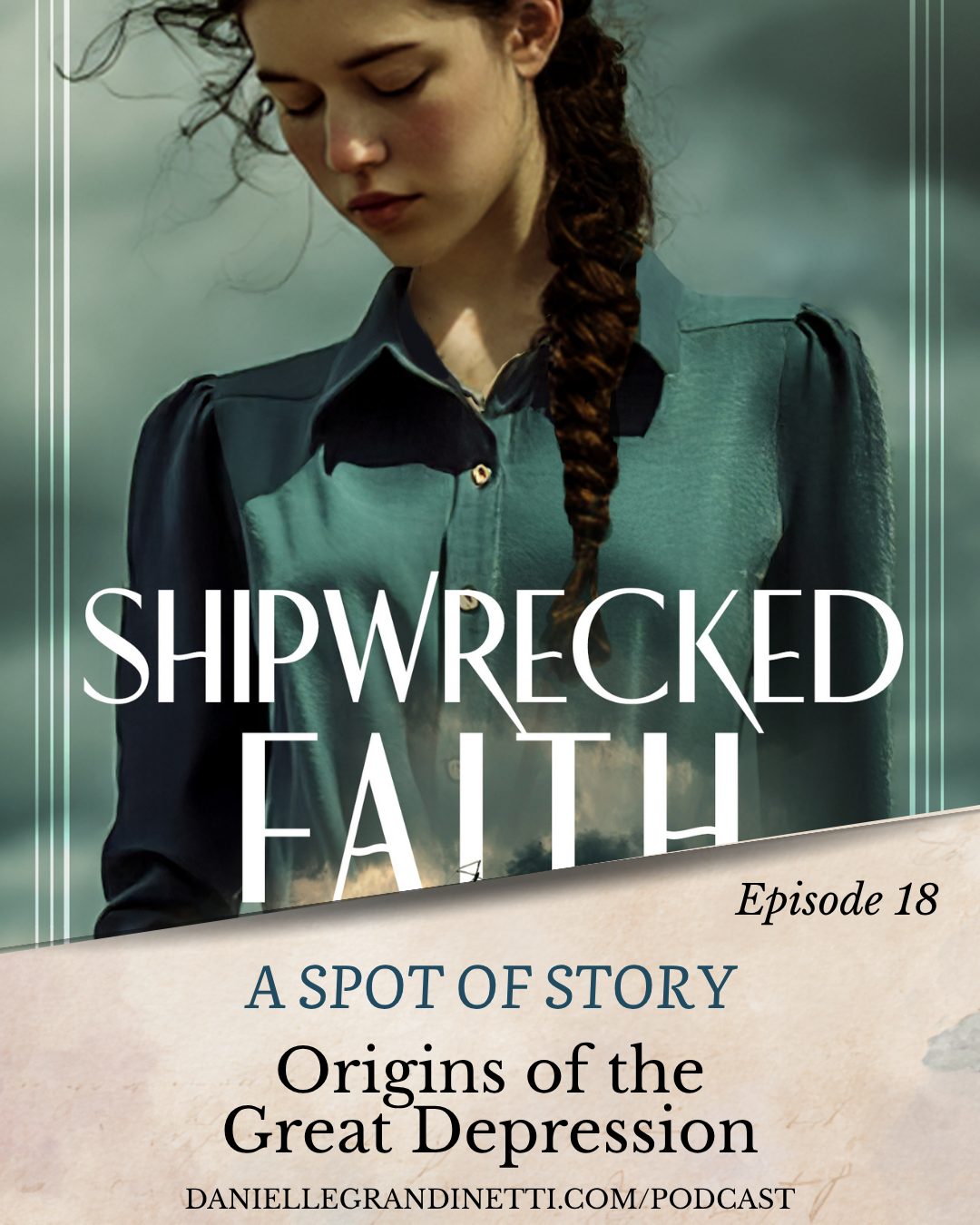
Book cover for Shipwrecked Faith by Danielle Grandinetti featuring a woman in a green 1920s dress with a steamer ship caught in a storm on Lake Michigan.

Chicago, October 1929—Kellan O’Roark is running on borrowed time. After handing over his cousin’s incriminating bootlegging ledger to the police, he intends to vanish before the mobster exacts revenge. His destination: the SS Wisconsin, a steamer headed for Milwaukee, upon which he’s secured work despite his fear of the water.

But despite his pressing need for escape, Kellan faces obstacles while leaving Chicago—including one who may break open his heart. Sadie Dawning, desperate to return to her family’s Wisconsin farm and ailing father, escapes a kidnapping attempt at Chicago Union Station when Kellan steps in and offers to smuggle her aboard the Wisconsin. His decision turns nearly fatal when an autumn storm capsizes the ship.

Washed ashore, the pair arrive at Sadie’s family farm to find new storms brewing on land. While Kellan hides his past to continue evading his cousin, Sadie fights for her place among her sisters while the farm battles the beginnings of the Great Depression. Caught between duty, a dangerous past, and a budding love, Kellan and Sadie must rely on their newfound faith in each other and renewed faith in God to weather the growing storm.

About Danielle Grandinetti

Danielle Grandinetti writes award-winning 1930s historical romance filled with mystery, suspense, and hope. She is a second-generation Italian-American rooted in Midwest traditions. Fueled by tea, books, and the creative beauty of nature, her stories explore love and belonging in hard times. Find her online at daniellegrandinetti.com.

Want to Read it Today?

*as an Amazon Affiliate, I earn from qualifying purchases.


Transcript

Welcome to A Spot of Story with Danielle Grandinetti. Cozy up with your favorite beverage as we chat about sweet romance, thrilling suspense, and fascinating history. Perhaps you'll find your next read in one of these stories.

On this episode of A Spot of Story: Echoes of History, we are stepping back into the 1930s to explore the very beginning of the Great Depression.

October 29, 1929, is known as Black Tuesday. This is the day that the stock market crashed and what we now know as the Great Depression began. However, it was actually not a single event that caused the crash. I feel like with history, we like to pin it all on one date, but the Great Depression was actually a buildup of what happened post-World War I.

After the war, as everyone found their footing again, the foundation had been shaken enough that the opulence of the 1920s was built on very shaky ground. On top of that, there were multiple weather situations that were happening in the United States. While we think of it as a very US event, the Great Depression was global; it was a ramification of World War I. It was a global economic depression that affected multiple countries. But the US suffered quite greatly—one, because of the industrial nature of the country at the time, but two, because of the weather.

We have to back up a little bit to understand what caused the downturn and how the weather affected it by understanding a little bit about farming. As the Western expansion changed the landscape of the prairies, and as more and more people decided to begin homesteading and farming in the Great Plains, they killed off the buffalo. There were no animals to actually tamp down the soil in the prairie region. Not only that, they ended up tearing up all the grasses that anchored the soil to the ground and instead planted wheat and corn and crops that required a lot of moisture to grow. Which at first worked out wonderfully, and it turned out to be a great place to have your homestead and your farm.

But in the 1920s, the weather systems created a drought—and I can't remember if it was an El Niño, but it was that type of weather event—where there were multiple years of dry weather. And so it dried out the soil, and because they didn't necessarily understand crop rotation at the time and proper soil management (that concept came out of the Great Depression to keep it from happening again), the soil began eroding and became what we also know as the Dust Bowl. It started affecting crop prices, and as crop prices went down, the farmers started having a harder time, which means they in turn couldn't provide the food the nation needed. So it was this multifaceted building of problems that ended up creating this crash.

We're going to add to that, that post-World War I, the men had all gone to war, and so women—after the 19th Amendment—began taking jobs. As the men came back, the women had filled in the gaps while the men were at war. And so now, entering the 1920s and 1930s, there was also a gender clash of, "The women took all our jobs. Now what do the men do? We need more work. We need more jobs. Women need to leave the workplace."

There weren't enough jobs to fill then because the entire system had changed, again, because of the war. Somebody still had to work and keep the home front while the men were fighting. So the women had naturally stepped in, and they were good at their jobs and capable. They didn't want to give up the life that they had built to care for their family, or in the case of war widows, they were the only thing standing between their children and poverty. It gave an opportunity for unmarried women to actually hold down a job and be independent. So not only was there a cultural change at the very familial level, it also impacted the employment rate.

So you have weather, you have the employment rate, and now you have the financial side. Think about the late 1800s and the Gilded Age era where the wealthy were opulent and looked very wealthy, whereas the disparity between those who were poor was very, very great. In the 1920s, it leveled out a bit, I think, where everybody portrayed that wealth whether they had it or not. The war was horrible and awful and everyone just needed to let loose. You have the Jazz Age, you have the speakeasies, because again, they come back from war and no, you may not have alcohol—but you can if you go find it illegally. So they processed the trauma of war as a collective nation in this particular way.

All of these things are combining into this perfect storm so that in October, as things on the stock market start getting a little rocky, the bubble bursts. And that is actually what happens on the 29th. But again, it didn't happen all at once. There's actually a few "black days," all at the end of October. So the stock market collapse actually began on Black Thursday, which was the 24th of October. There was a steep drop and they thought they'd fixed it. But then Black Monday, the stock markets crashed again. And so by the time Black Tuesday hit, it had been a week of failure after failure after failure. They just couldn't recover then, and so people lost everything.

But it wasn't the global news that it is now. Instead, they got their news from the newspaper, and they heard about this event that happens on Wall Street. The wealthy patrons are the ones who buy stocks and have them on Wall Street—the business owners, the conglomerate heads, the ones with all the money who then lost it because they bet on the stock market. But the banks also got their money from the stock market, and at the time there was no insurance. So you put your money in the bank, the bank uses the money, they lost the money on the stock market, and now the everyday people can't get it back because there is no money. The bank failed; they lost all their money.

So you have business owners who lost their money, so they can't keep their companies and end up having to lay off employees—and they laid off women first because of all the gender challenges that had been going on. You have banks who lost their money, and so they can't give the layperson their money back. So now the everyday person is out of money. They just got laid off from their job. There's no money left.

It was a buildup of a spiral that happened to lead up to the Great Depression, and then triggering the Great Depression was several factors all at once that just imploded. And the Dust Bowl aspect is part of what made the Great Depression more impactful here in America because you added on this climate aspect, so our food supply was affected as well. So a lot of factors played into what made it such a difficult decade.

One of the reasons why some of FDR's policies actually helped pull them out was because they were doing studies on crop rotation. He began the Conservation Corps to replant trees that the lumber mills had decimated. He started farming compensation and programs to be able to help farmers recover. And so getting some of those programs started was one of the things that helped give the country a leg up to right itself.

And from a big picture, once World War II began in Europe and the US entered it, that's a whole other layer we aren't going to get into. In a lot of ways, World War I opened the door for World War II. The interwar period was more of a ceasefire than it was an actual end to the war, even though it was very much touted as that. You know, "the Great War is the war to end all wars." You have Armistice Day, a day where there's a ceasefire and everything stopped at the 11th hour of the 11th day of the 11th month.

No one really saw World War II coming. I wouldn't say nobody; there were definitely people who saw it coming. But there was this general feeling that, "Nope, the war's over. That's good. Let's celebrate." But they never actually fixed the problems that caused World War I. So now you had the economic side of things that ended up bringing about a vacuum that created the door for World War II.

Why do I talk about all of this and how Black Tuesday, the day the stock market crashed, was the start of the Great Depression? Because I have a book that actually takes place on that particular day, on October 29. And what made it most fascinating to me were the headlines. Where most of the country talked about the stock market failing, in Wisconsin, that wasn't the headline. The headline was about the SS Wisconsin, which had left port on the night of the 28th. It was a freight steamer, and it was headed north and ran into a storm.

Now, there had been multiple storms that week. Another ship had sunk about a week earlier. But the captain of the Wisconsin thought they could make it, and they ended up capsizing about five miles offshore, near the Kenosha area. The Coast Guard was sent out. Another fishing vessel braved the incredibly high waves to make it out there to try to rescue as much of the crew as they could.

The newspaper headlines on the 29th and the 30th and 31st weren't about the stock market crash. They were about this ship sinking and about the brave men of the Coast Guard who went out to rescue them. And it struck me so much about how there's this countrywide economic crash that happens—a global economic downturn that affects so many people—that as we look back at history, it is one of the most significant turning points in US history.

And yet, on that day in Wisconsin, their event was a shipwreck. There were lives lost. I listened to a testimony of someone who remembers watching it sink. That was the memory that they took away from that day. Seeing that and learning that is what inspired me to write a story that began on October 29th, 1929. And yes, it was the start of the Great Depression, but in my characters' lives, it was the sinking of the SS Wisconsin.

If you'd like to learn more about my book, which is called Shipwrecked Faith, you can visit the show notes, and I'll link to it there. It's a story about an Irish immigrant who has relatives in the Irish mob and wants to get away from all of that, and a farmer's daughter who was trying to work in Chicago when her father falls sick and she needs to get home. Events conspire to put them together on the SS Wisconsin on the day that it sinks, and the story goes from there.

Thank you for tuning in to this journey into the past. Again, you can find additional resources in the show notes and links to Shipwrecked Faith on the episode page. I hope you enjoyed this little peek into the past.

Thank you for listening to A Spot of Story with Danielle Grandinetti. We hope you enjoy today's conversation. Let us know by leaving a comment below and be sure to subscribe so you don't miss an episode. Discover more information about today's book by visiting A Spot of Story online at daniellegrandinetti.com/podcast.

Happy reading.

To make this story accessible to everyone, an AI-assisted transcript is provided above. It has been edited for clarity to ensure it captures the heart of our conversation.

Share the Tea

Enjoyed today’s post? You can share it with a friend, pin it to your reading list on Pinterest, or pass it along in your favorite book group. You’re welcome to use this graphic or one of the share buttons below.

I’d love to hear what resonated with you about this book — feel free to leave a comment. I always reply, though if it’s your first time posting I’ll need to approve it before it appears.

And if you’d like to support me and help keep it free, you can always buy me a tea.

Promotional graphic for A Spot of Story podcast Episode 18, titled "Echoes of History: The Sinking of the SS Wisconsin," featuring an atmospheric 1930s maritime theme and the book cover for Shipwreck Faith.

Ciao, and thanks for visiting!

The best way to stay connected is through my weekly email, Fireside News. You’ll receive cozy updates, behind-the-scenes book notes, and a complimentary historical romance novelette when you subscribe.

Until next time, may your reading bring both light and encouragement.

Happy reading!
~ Danielle.
Episode 26 | Echoes of History: 1932 Summer Olympics

A Spot of Story Episode 16 | Echoes of History: The Setting Inspiration of Eyewitness Sketch

Echoes of History

by Danielle Grandinetti | Apr 18, 2026

The Setting Inspiration of Eyewitness Sketch

Episode 16

Listen In

Below, you'll find the full transcript of today’s episode, in case you prefer to read or want to reference something we talked about.

About Eyewitness Sketch

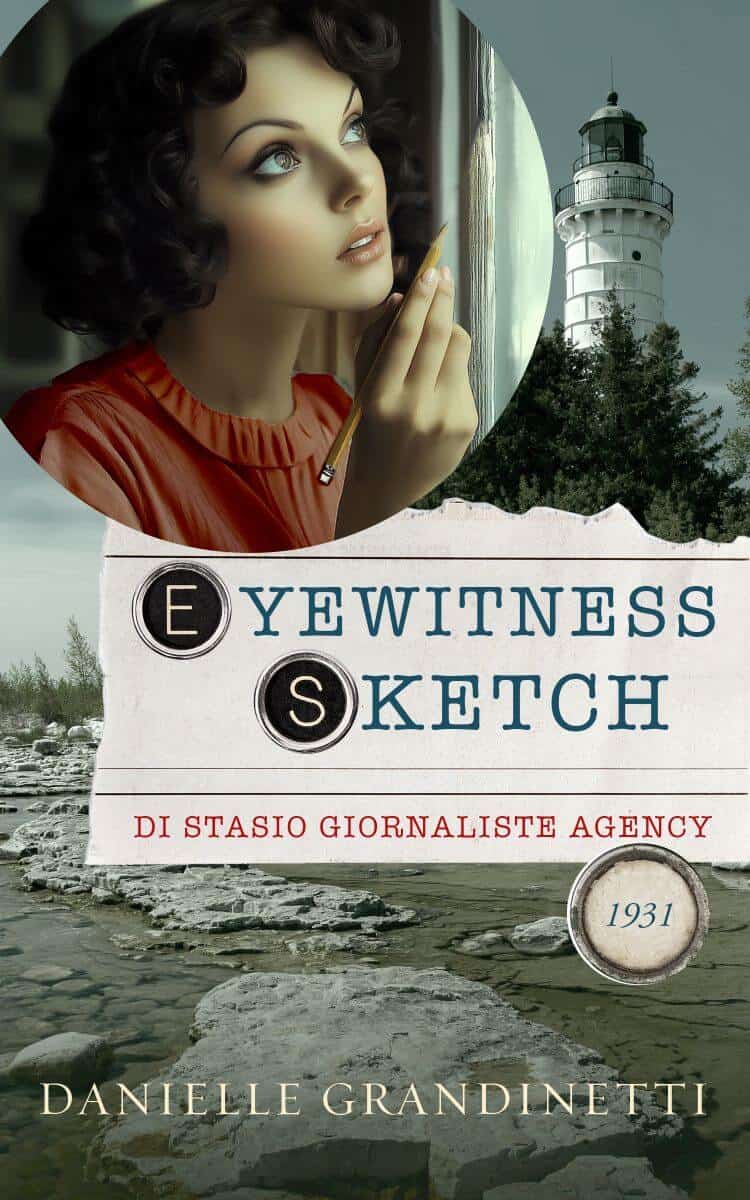
Di Stasio Giornaliste Agency 1 Eyewitness Sketch

Finding love at Death's Door might destroy them both.

CHICAGO, Ill., 1931—Gabriella Salatino, an illustrative journalist for the Di Stasio Giornaliste Agency, never planned to return to her island home at the tip of Wisconsin's Door Peninsula. Nor did she plan to witness a murder. But when her life is threatened, she has no choice but to hide out under the protective care of the man she left behind.

Deputy Andri Jóhannsson has been coming to Gabby's rescue his entire life, but having her in his secluded home tests the limits of his patience. The woman has no sense of self-preservation, and he has a smuggling ring to ferret out. Except, her skill with sketchpad and pencils might be the very investigative tool he needs in order to catch the bootleggers.

With a murderer on her trail and criminals evading detection, Gabriella and Andri must set aside the past or risk its eruption. Because this time, the collateral damage might include more than losing their friendship. It might cost them the lives of those they love.

La Verità con Integrità. Truth with Integrity. The Legacy of a (Girl) Stunt Reporter.

About Danielle Grandinetti

Danielle Grandinetti writes award-winning 1930s historical romance filled with mystery, suspense, and hope. She is a second-generation Italian-American rooted in Midwest traditions. Fueled by tea, books, and the creative beauty of nature, her stories explore love and belonging in hard times. Find her online at daniellegrandinetti.com.

Want to Read it Today?

*as an Amazon Affiliate, I earn from qualifying purchases.


Transcript

Welcome to A Spot of Story with Danielle Grandinetti. Cozy up with your favorite beverage as we chat about sweet romance, thrilling suspense, and fascinating history. Perhaps you'll find your next read in one of these stories.

Danielle Grandinetti: On this episode of A Spot of Story: Echoes of History, we are stepping back into the 1930s to explore the inspiration behind the setting of Eyewitness Sketch. Eyewitness Sketch is the first book in my Di Stasio Giornaliste Agency series, a 1930s historical romantic mystery series. Eyewitness Sketch is about finding love at Death's Door, and Death's Door is exactly what we're going to explore today.

Eyewitness Sketch follows Gabriella Salatino, an illustrative journalist for the Di Stasio Giornaliste Agency. She never planned to return to her home island at the tip of Wisconsin's Door Peninsula, nor did she plan to witness a murder. But when her life is threatened, she has no choice but to hide out under the protective care of the man she left behind.

Deputy Andri Jóhannsson has been coming to Gabby's rescue her entire life, but having her in his secluded home tests the limits of his patience. The woman has no self-preservation, and he has a smuggling ring to ferret out. Except her skills with the sketchpad and pencils may be the very investigative tool he needs in order to catch the bootleggers.

With a murder on her trail and criminals evading detection, Gabriella and Andri must set aside the past or risk its eruption, because this time the collateral damage might include more than losing their friendship. It might cost them the lives of those they love.

I am excited to talk about the inspiration here. If you look at the state of Wisconsin, you'll see along the Lake Michigan shore this little bit of land that juts out into the lake and creates the separation between Lake Michigan and Green Bay. That particular peninsula is called the Door Peninsula, and at its tip is an island called Washington Island. The water between Washington Island and the mainland of the peninsula is called Death's Door.

Now, Death's Door is called Porte des Morts. It's a French term, literally meaning "Death's Door." The reason it was called that is because of the number of shipwrecks that often happened there. It was a very dangerous passing that ships would have to go through when they went from Lake Michigan to Green Bay. According to Washington Island's history, prior to modern navigation aids, hundreds of ships floundered around Death's Door because of the landscape and the rocks.

To combat that in the late 1800s, shipbuilders pushed to have a canal built at the base of the Door Peninsula around Sturgeon Bay that led from Lake Michigan straight to Green Bay. That allowed them to bypass the dangerous passage of Death's Door. They finished that man-made canal in the late 1800s, but that doesn't mean that Death's Door was any less dangerous; there just were fewer ships that would take that particular route.

So, as I was exploring where to set my particular story, knowing that there weren't as many shipwrecks up at the tip of Door County lessened a little bit of the danger, but it didn't mean that there wasn't danger there. It was just too much of a perfect place to set my little town.

Another aspect of why I wanted to set it on the Door Peninsula was because of a little town called Ephraim. Ephraim is on the bay side of the peninsula and it is known as being the last dry town in Wisconsin. In fact, Ephraim, Wisconsin, didn't lose its dry town status until 2016—almost 90 years after Prohibition ended.

What went on to create a town that stayed dry so long and that fought against Prohibition in a state where they stopped enforcing Prohibition well before it actually ended? How did a town in a state that wanted to support its alcohol industry stay dry so long?

I didn't want to use a real place because I wanted to create my own dynamics and challenges within a town. So, this little town provided the "what if" question that allowed me to branch off and create this particular story. I wanted to honor Ephraim's history and give that respectful nod toward Ephraim and its Norwegian heritage by naming my little town after a Norwegian word. Heima is a Norwegian word for home. It's also Icelandic for "at home" or "home again."

Washington Island, for example, has a very strong Icelandic background, and I wanted to honor that by using the term Heima as the name of my town. I also gave my characters Norwegian or Icelandic names. I didn't use the Swedish spelling; I used the Norwegian or the Icelandic spelling to provide that connection, whether for Andri Jóhannsson, his father the Reverend Jóhannsson, or his boss Chief Mickelson. I wanted to create that connection to the real-life cultural heritage that was there.

One aspect that I didn't include in this particular story was the Native American history. It changed hands among Native American communities before and after the Northern European immigrants arrived. It's complicated and complex, and not without its racial challenges. If you would like to learn more about that history, I would strongly encourage you to dig into it a little bit more.

If there was a nod to it at all, I chose to do it in a way that I could speak to as a second-generation Italian-American. My heroine is Italian and is very different looking than all the blonde, blue-eyed Northern Europeans on this island.

Back to the setting, though. Washington Island is the big island that is across the Death's Door strait. There are a couple of islands in that strait, one of which is Plum Island and the other is Pilot Island. I chose to use Pilot Island as my model for Heima Island to create my own little island that had its own culture, so I didn't misrepresent any history for these real-life places.

I based the lighthouse that appears in this particular story off the Pilot Island Lighthouse. You will want to make a note to look for a future book that will be featuring that particular lighthouse. There's a bit of an Easter egg in Eyewitness Sketch. Follow my book news to learn more about that, because that book is not even public knowledge as of this recording.

This particular community that I created is a very religious community. Because of that, they were very pro-Prohibition; they wanted to maintain this dry community. However, Prohibition was not enforced, and so bootleggers in Chicago would run their illegal alcohol through Wisconsin. Shipping by boat was a whole lot easier if you're trying to get bootlegged alcohol down from Canada. Death's Door was the perfect stopping point—or so my imagination created—which is why Heima Island had a smuggling problem in my book.

Deputy Jóhannsson was attempting to uncover who the bootleggers were. This was something that he had to enforce as law enforcement in this particular town. I wanted to explore some of those emotions as well because state officials weren't policing this anymore, but at the town level, he had to. His father was also the reverend who was one of the staunch supporters of Prohibition, which added a fun layer of family dynamics to this story.

The heroine is a sketch artist from Chicago who was originally from this island, and she and Andri were childhood friends. She uses her skill as an illustrative journalist to help sketch the crime scenes that Andri comes across in the course of his investigation.

I will leave the rest for the story so you can see how it works out, but the history of the island and how the inspiration of the area created my fictional island is what I wanted to focus on today. I hope that it will inspire you to dig into some of the history behind real places like Ephraim and Washington Island, the entirety of the Door Peninsula including places like Gills Rock, Ellison Bay, or even Sturgeon Bay.

I love exploring geographical history and using that in a book to allow the land itself to inform the story and provide that extra layer of both historical significance and cultural inspiration. Thank you for tuning in for this journey into the past. You can find additional resources in my show notes on my website, including links to the history behind Ephraim or Washington Island, or just to learn more about how you could visit Door County. It is absolutely gorgeous. And if you can't visit in person, I hope you'll take a chance and visit through a book by visiting Heima Island in Eyewitness Sketch.

Thank you for listening to A Spot of Story with Danielle Grandinetti. We hope you enjoy today's conversation. Let us know by leaving a comment below and be sure to subscribe so you don't miss an episode. Discover more information about today's book by visiting A Spot of Story online at daniellegrandinetti.com/podcast. Happy reading.

To make this story accessible to everyone, an AI-assisted transcript is provided above. It has been edited for clarity to ensure it captures the heart of our conversation.

Share the Tea

Enjoyed today’s post? You can share it with a friend, pin it to your reading list on Pinterest, or pass it along in your favorite book group. You’re welcome to use this graphic or one of the share buttons below.

I’d love to hear what resonated with you about this book — feel free to leave a comment. I always reply, though if it’s your first time posting I’ll need to approve it before it appears.

And if you’d like to support me and help keep it free, you can always buy me a tea.

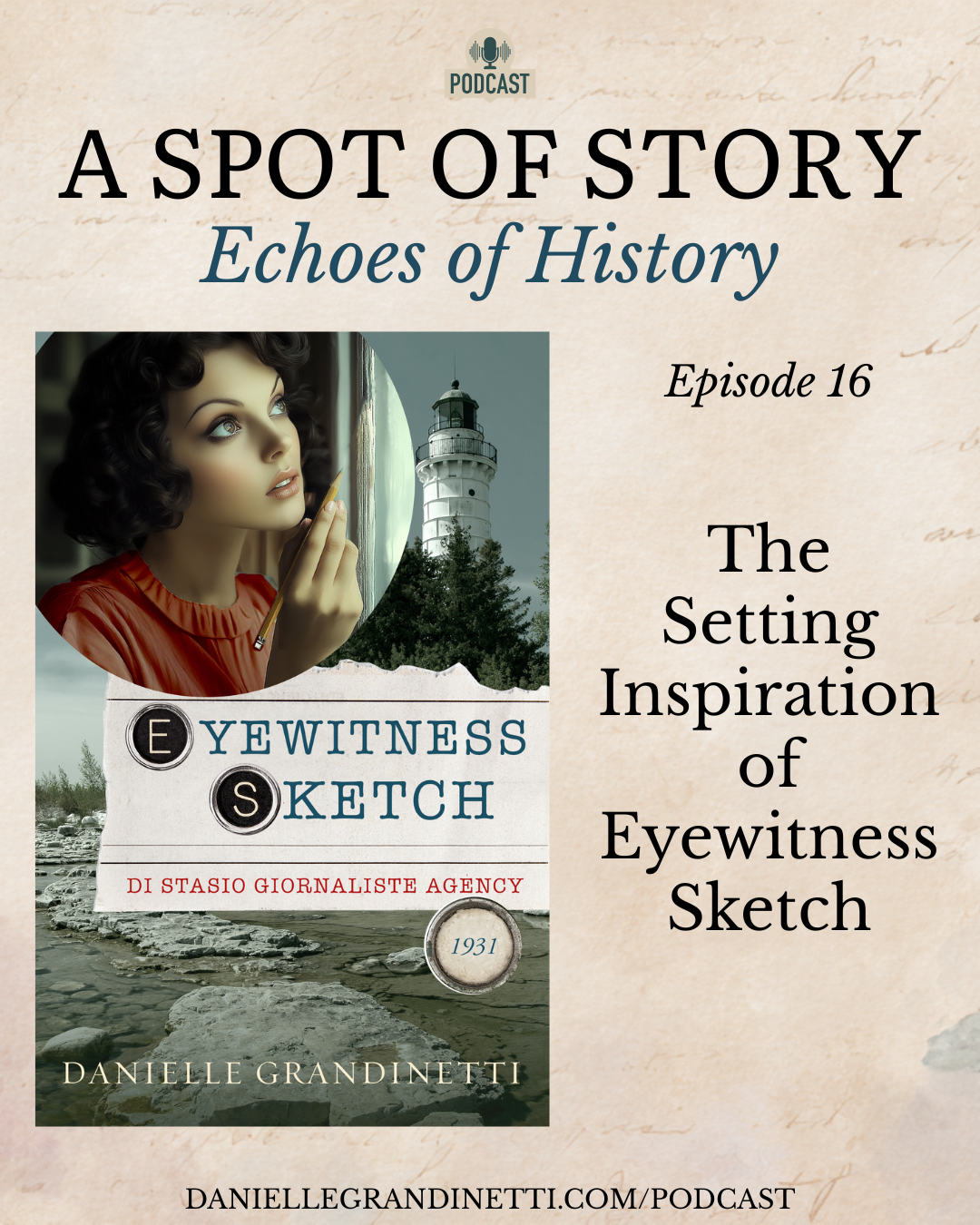
The Setting Inspiration of Eyewitness Sketch Podcast 45 Social Post (13)

Ciao, and thanks for visiting!

The best way to stay connected is through my weekly email, Fireside News. You’ll receive cozy updates, behind-the-scenes book notes, and a complimentary historical romance novelette when you subscribe.

Until next time, may your reading bring both light and encouragement.

Happy reading!
~ Danielle.