Guest Post | Sanctuary and Sabotage by Lori DeJong
Danielle Grandinetti
Welcome to the JustRead Blog Tour for ...
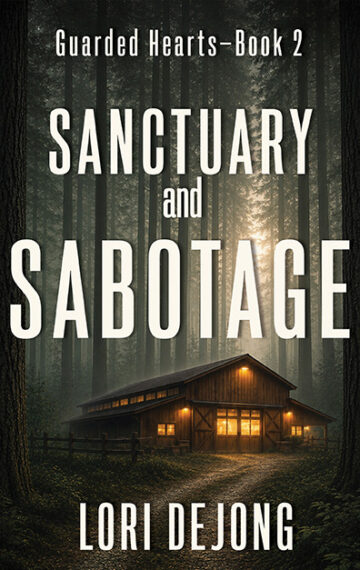
Sanctuary and Sabotage

Welcome to the Blog Tour for Sanctuary and Sabotage by Lori DeJong, hosted by JustRead Publicity Tours!
About Sanctuary and Sabotage
Title: Sanctuary and Sabotage
Series: Guarded Hearts #2
Author: Lori DeJong
Publisher: Scrivenings Press
Release Date: September 15, 2026
Genre: Romantic Suspense
PURCHASE LINKS: Goodreads | Amazon | Barnes & Noble | Bookshop | BookBub
The greatest threat isn’t the enemy outside—it’s the secrets between them.
Security Specialist Trevor Paxton returns to his Texas hometown searching for sanctuary after the death of a colleague under his leadership. The family ranch should be a place to regroup, recover, and make peace with the past.
Instead, it leads him straight back to Kinsley Talbot.
The freckle-faced tomboy he remembers is now a beautiful, determined veterinarian fighting to protect her clinic, her family’s land, and a future built on faith and grit. Trevor never expected to fall for the sister of his boyhood best friend, but the more time he spends with Kinsley, the harder it is to walk away.
When her clinic is sabotaged and danger closes in, Trevor’s instincts tell him the attack is no accident. Kinsley is holding something back, and though she refuses his offer to involve his security agency, Trevor knows the threat is too serious to ignore.
As Kinsley begins to trust him with her heart, Trevor makes a choice that could shatter that trust. Working behind the scenes may be the only way to keep her safe, but Kinsley has a secret of her own, and the truth between them may be as dangerous as the enemy closing in.
Perfect for fans of Robin Patchen, Lynn H. Blackburn, and Dee Henderson, Sanctuary and Sabotage is a Christian romantic suspense novel filled with small-town danger, buried secrets, and a Texas mystery where love and trust are tested under fire.
More in This Series

About Lori DeJong

Lori DeJong (pronounced DeeYung) is an award-winning contemporary Christian romance author who enjoys penning stories full of grace and the redemptive power of God’s love that inspire others to hope regardless of circumstance, find joy in the moment, and grow in their faith.
Born and raised in Phoenix, Arizona, Lori arrived in Texas in 2005 and dug those roots right in. She currently resides in beautiful Georgetown, north of Austin, with her husband of thirty years. Other than their two fur-babies, their nest is empty, as their daughter and son-in-law are settled in the Dallas/Ft. Worth area.
Lori loves to write about love and romance with a touch of suspense, with a firm foundation of faith. Clean but sassy, sparkly, and even goose-bumpy romance, with God in the middle and characters seeking and learning and changing, couldn’t be more heartwarming or spine-tingly.
Lori is an ACFW Genesis Award winner, four-time Selah Award finalist, two-time ACFW Carol Award finalist, has been awarded an Angel Award, and placed second in the FHL Reader's Choice Awards. She's also a member of several organizations, including ACFW, Faith, Hope, and Love Christian Writers, Novel Academy, CenTex Christian Writers, among others. You can visit Lori at https://loridejongwrites.com and sign up for her newsletter for writing updates, book recommendations, a monthly giveaway, and more.
Guest Post by Lori DeJong
A Day in the Life of Kinsley Talbot, female protagonist in Sanctuary and Sabotage
Kinsley’s days tend to begin early. Really early. There are horses to check, cattle that need attention, ranch calls to make, and enough coffee to convince her that she really did choose this profession willingly.
She’s a large-animal veterinarian, which means her office doesn’t always have four walls and a receptionist. Sometimes it’s her treatment barn. Sometimes it’s a surgical suite. And sometimes it’s her specialized veterinary truck parked in a pasture while a very large, very opinionated animal decides if it intends to cooperate. And because animals have a remarkable ability to need medical attention at the least convenient possible moment, she never really knows what her day will bring.
Fortunately, she has Charley.
Her cousin and business partner is also her best friend, which means Charley is the person Kinsley can count on to keep her schedule on track, take care of the business, and all the other things life tends to throw at her. She’s also the person who knows when Kinsley is trying to pretend everything is fine when it definitely isn’t.
And these days, there’s a lot that isn’t.
Take Kinsley’s brother. He has a gambling problem, and his latest round of bad decisions has landed him in serious trouble. He borrowed money from the wrong people, and now he’s running from the consequences.
Which means Kinsley has something else to worry about between ranch calls and veterinary emergencies: whether her brother is safe—and whether the people looking for him will find her first.
Then there’s Trevor.
Sixteen years ago, he left for the Army, breaking her teenage heart. She never expected to see him again, much less find him helping out at the clinic every day, going with her on calls, talking as if those sixteen years hadn’t happened.
But they did happen. They changed both of them.
And yet, somehow, the connection from their childhood is still there. Maybe stronger than it should be.
Trevor has returned to Kinsley’s life at a time when she really doesn’t have room for complications. And Trevor himself may be the biggest complication of all. They’ve become close, and there are moments when she wonders if what they’re feeling is more than friendship.
The problem? He’s not staying. And she knows better than to give her heart to a man who might disappear from her life a second time.
At least, she should know better.
So, imagine Kinsley’s day: a morning call to a ranch, a horse that refuses to cooperate, back to the clinic with patients waiting, answer a dozen questions, get enough dirt on her Hokas to make cleaning them a lost cause, and Charley reminding her that she forgot to eat lunch again.
Then Trevor shows up at exactly the wrong—or perhaps exactly the right—moment.
Somewhere in the middle of all that, her phone rings. It’s her brother. Or it’s someone looking for him.
Suddenly, the ordinary problems of her day seem a whole lot less important. Because when the people she loves are in danger, Kinsley doesn’t know how to stand on the sidelines.
That’s true when it comes to an injured animal. It’s true when it comes to her brother. And it’s definitely true when it comes to Trevor.
But there’s something she’s learning that may be harder than any veterinary procedure she’s ever performed: she can’t fix everything. She can’t make her brother’s choices for him. She can’t control who is coming after him. And she certainly can’t decide whether Trevor stays or goes.
She can only choose what she will do with the circumstances God has placed in front of her. And sometimes, trusting God means taking the next step even when you have absolutely no idea what’s waiting around the corner.
For Kinsley, that next step might involve a ranch call, a frightened horse, a dangerous man, or the man she never expected to love again.
And knowing Kinsley, she’ll probably face all four before lunch.
Read Today
*as an Amazon Affiliate, I earn from qualifying purchases.
JustRead Tour Giveaway
(1) winner will receive a $25 Amazon gift card plus a signed copy of both Mistletoe and Malice and Sanctuary and Sabotage!

Full tour schedule linked below. The giveaway begins at midnight October 5, 2026 and will last through 11:59 PM EST on October 12, 2026. Winners will be notified within 2 weeks of close of the giveaway and given 48 hours to respond or risk forfeiture of prize. US only. Void where prohibited by law or logistics.
Giveaway is subject to JustRead Publicity Tours Giveaway Policies.
Follow along at JustRead Tours for a full list of stops!

Share the Tea
Enjoyed today’s post? You can share it with a friend, pin it to your reading list on Pinterest, or pass it along in your favorite book group. You’re welcome to use this graphic or one of the share buttons below.
I’d love to hear what resonated with you about this book — feel free to leave a comment. I always reply, though if it’s your first time posting I’ll need to approve it before it appears.
And if you’d like to support me and help keep it free, you can always buy me a tea.
Ciao, and thanks for visiting!
The best way to stay connected is through my weekly email, Fireside News. You’ll receive cozy updates, behind-the-scenes book notes, and a complimentary historical romance novelette when you subscribe.
Until next time, may your reading bring both light and encouragement.
Happy reading!
~ Danielle.